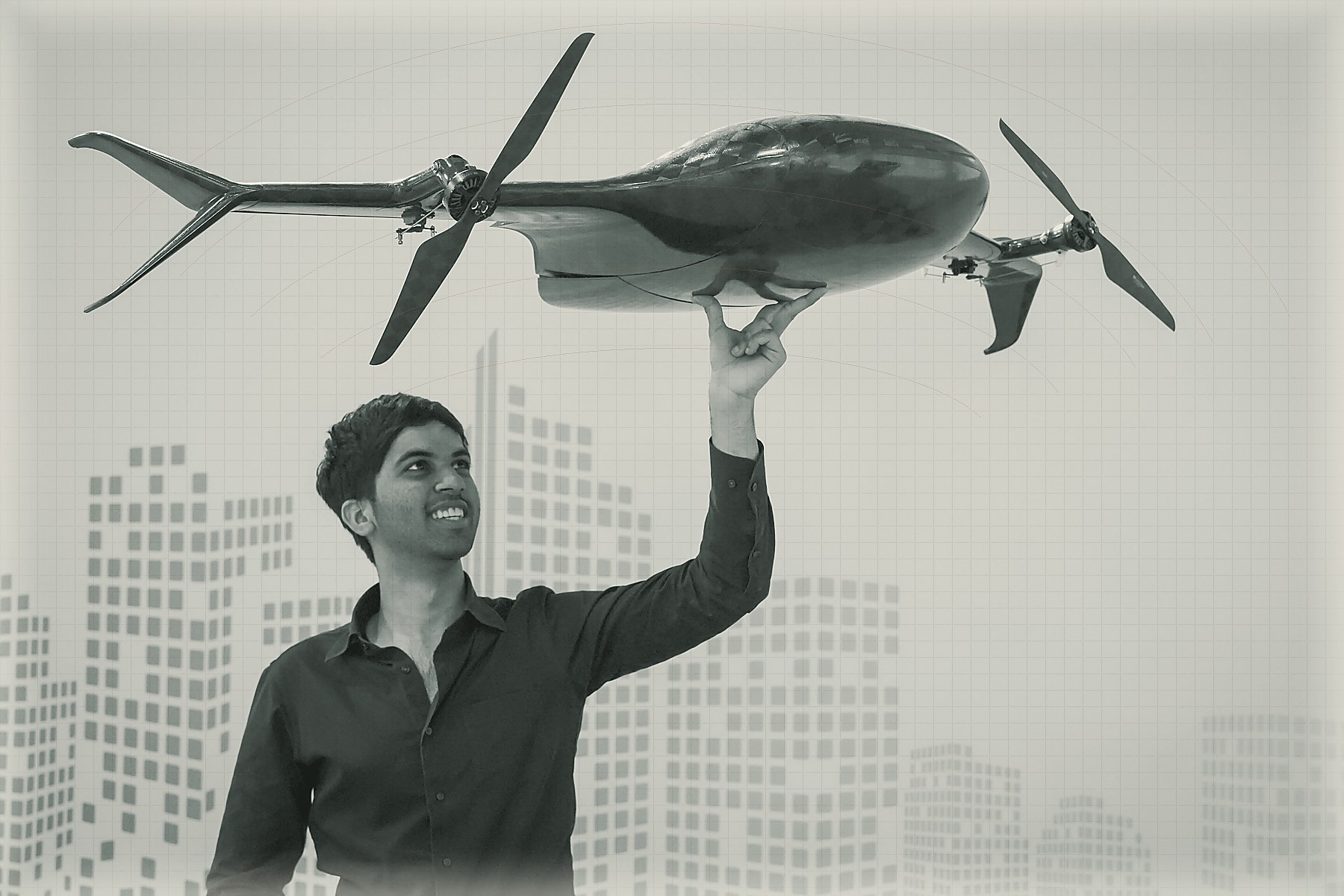
Around this time last year, we announced a pre-seed round in Airbound. Today we are pleased to announce that Airbound has closed an $8.6M seed round, led by our friends Lachy Groom of the eponymously named LGF & Leo Polovets of Humba Ventures. Lightspeed is doubling down in this round .
When we first partnered with Airbound, they were a small, fiercely technical group taking on one of the hardest challenges in aerospace: creating a reliable, autonomous VTOL platform that has the same aerodynamic efficiencies of an airplane, but yet has the scale that is characteristic of drones. That ambition is no longer theoretical. Over the last one year we’ve built the strongest drone team in India — up from from ~5 to over 50+ engineers across manufacturing, aeronautics, composites, ops, and software. We’ve also hit the key technical milestones across drone flight safety, mfg standardization & scaling that has allowed us to start pilots with one of the largest hospital chains in India, Narayana Health.
First, on the materials side, Airbound has locked in a structural stack that’s hard to match: 42 GSM spread-tow carbon fiber (with in-house pre-preg) and 36 GSM Kevlar in optimized sandwich panels. That combination yields a frame that handles 30 km/hr gusts, stays exceptionally light, and tolerates hundreds of cycles without fatigue. Our investments in composites & manufacturing R&D is a strategic advantage that is playing out in flight safety.
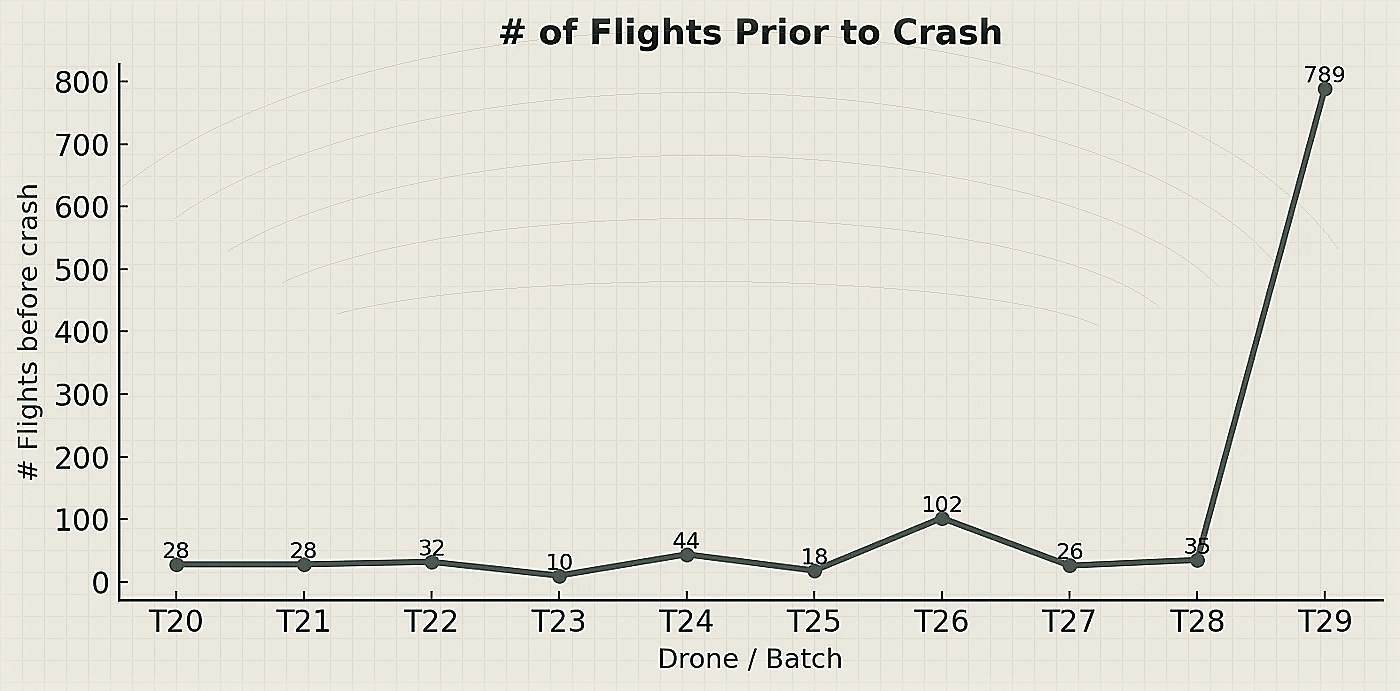
The team built its own load-test rigs to push past normal flight envelopes and then proved it in the field. Besides manufacturing quality at scale, Airbound has done a lot of work on the sensor rig, the autonomy module, and additional safety fallbacks. We’ve hardened the state machine that manages back-transition from fixed-wing to vertical, added wind-aware weathervaning logic, stabilized altitude-hold during lateral positioning, and tuned thrust-vector response to pitch error. The landing regime moved from spiral descents to straight-in approaches that are easier to reason about and far easier to scale to multi-aircraft operations. Those changes aren’t cosmetic; they map directly to a shift from roughly one incident in 30 flights to the latest batch that has so far logged 789 flights and yet to see a failure. A 60-gram parachute module sits behind all of this as a last-resort risk cap, giving the program an additional safety layer without compromising weight. Our aim is to get global best-in-class here (<1 in 5000+ flight incidents) in the next few quarters.
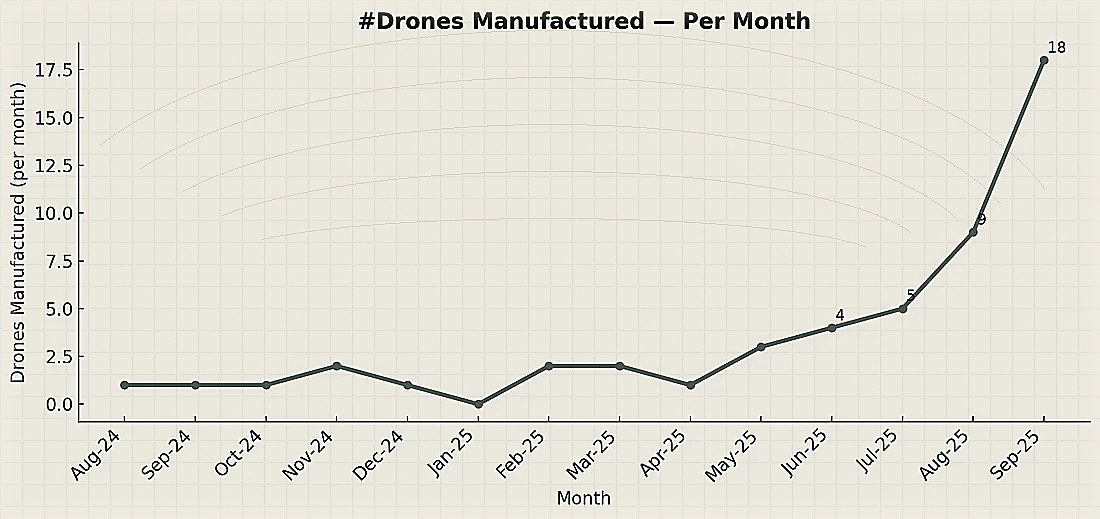
And finally, none of this was possible without the team that’s behind all the engineering rigor. Airbound now has the depth to run hardware, software, and operations in parallel: composite engineers who can hold tolerances, controls engineers who can prove stability margins, and an ops team that can push the system daily without burning it down. The cadence is visible in the data we’ve already shared and we’ll continue to bend the curves on these in coming months and quarters.
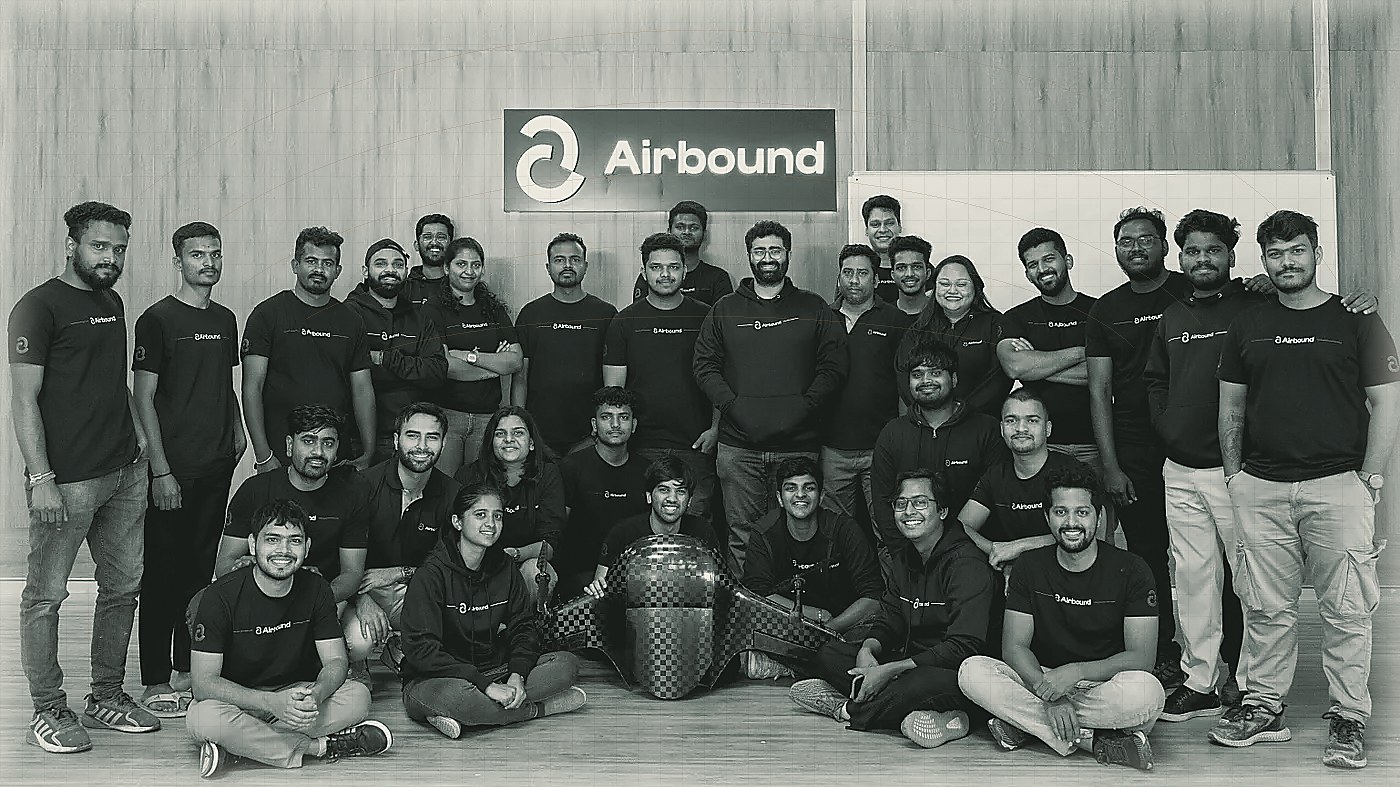
We wrote last year about meeting a 17-year-old founder who had dropped out of a US college admit to build an aircraft he believed should exist. That first demo was the start of a long, quiet year filled with crashed hardware, streamlining mind-boggling complexity of manufacturing a one-of-a-kind drone, hiring a killer team, and putting out fires in every sense of the word. The mission didn’t change — make the last mile economically invisible by building the most efficient aircraft we can — and the work is catching up to the ambition. What began as a prototype in a garage is now a system that manufactures, flies, and scales. We are excited for 2026 as Airbound comes ever closer to their vision.



No comments yet.